
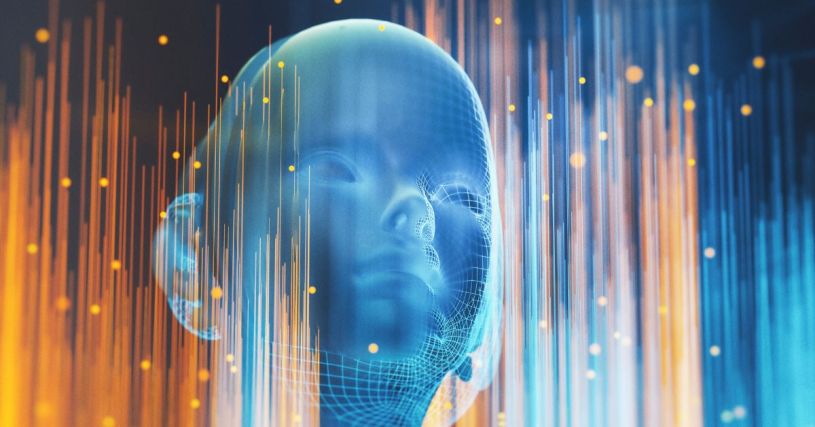
The revolutionary innovations in AI research are breathtakingly awe-inspiring! You may be apprehensive about its potential consequences, yet don’t let that deter you from exploring these groundbreaking advancements; rather, let this guide serve as an UNLOCKING KEY for unlocking the full potential of AI technology.
1. AI can now create its own Google-like images
The advent of artificial intelligence (AI) has significantly advanced our understanding of how the human mind works and what it takes for us to perceive reality.
As a result, scientists are exploring ways that AI can generate its own images – including photographic ones. In fact, researchers have recently discovered how to create artful representations with little more than an algorithm! This ability has been demonstrated by creating realistic photos from scratch using only text as input.
An artist eschews convention and experiments with novel ideas in order to create striking new creations, whether for display or for sale. However, recent research involving Google’s DeepDream neural network demonstrates the potential of generating artwork without having any prior knowledge of artistic styles.
2. AI can diagnose depression with 90 percent accuracy
AI has been harnessed in a way that could help to diagnose depression; yet its efficacy remains a contentious topic.
In the research conducted by IBM and Columbia University, an algorithm was employed to examine facial expressions and detect signs of sadness and despair in patients without any clinical training. With only a user-friendly interface and no supervision needed during their sessions, this method proved more effective than any other existing method of diagnosis.
The study examined 86 psychological profiles of individuals between the ages of 16 and 65 who sought treatment at New York City’s Bellevue Hospital or Rainbow Babies & Children’s Hospital – both renowned institutions where individuals with mental health issues are typically treated. After analyzing data collected from these individuals as part of their admissions, researchers were able to devise accurate diagnoses based on 69 percent accuracy using IBM Watson AI technology.
3. AI can be trained to write short stories
AI is an incisive tool that can be applied to hasten the writing process, both imaginative and literal. This software can evaluate a piece of text for its literary merits, search for patterns within it and generate new prose on demand.
Writer-turned AI researcher Olivia Noelle explores this exciting prospect in her blog article ‘The Art of Artificial Storytelling’: “As I’ve said before, if you can imagine it, we can probably program it into a story.” She goes even further by stating that she has witnessed AI-written stories being showcased at the World Science Fiction Convention; captured in photographs which were then shared online – giving readers experiences they could relate to!
4. AI is now able to play video games better than humans
Video games are arguably one of the most popular forms of entertainment, providing a captivating escape from reality. Indeed, in 2018, revenue derived from this sector is expected to exceed that of movies and music combined!
It’s not just the enthusiasts who are enthralled by video games; many companies are investing heavily in them as well. For example, Japanese software giant Konami Corporation just launched its own digital gaming platform for consoles – Nitro+. This groundbreaking initiative marks an exciting turn in corporate gaming culture!
The reigning champions at the International e-Sports Federation have recently selected the “Most Valuable Esports Player (MVP)” for 2019 – it was none other than the AI-powered bot mastermind AlphaGo Zero!
5. AI can create a realistic 3D human face from millions of photos
Researchers from Google Research and the University of South Carolina recently revealed a remarkable feat in AI technology: creating a realistic 3D human face from millions of photographs.
This groundbreaking development demonstrates that computers can now offer up lifelike representations akin to our own visages without any sort of assistance. Researchers had previously relied on data such as age, gender and even ethnicity when crafting their digital counterparts; however this latest endeavor has demonstrated that it is within reach for AI systems to create a more accurate rendition of our likenesses – with little intervention required!
6. AI is starting to be able to understand and communicate with machines
From simple tasks to more complex ones, AI is on its way towards mastering the art of communication with other machines. For example, in 2016 researchers at MIT were able to create a chatbot capable of not only conversing with one person, but also comprehending and responding appropriately to the interaction.
Furthermore, if you give it a command like ‘open’ or ‘close’, this robot will follow through and execute the action requested; such functionality is attributed to a sophisticated form of natural language processing (NLP) – a technique commonly utilized in today’s day-to-day life.
7. AI is starting to be able to paint like Van Gogh
In December 2017, Google’s Deep Dream model was able to imbue computer-generated imagery with the painterly qualities of Vincent van Gogh. This is certainly a major achievement in AI research!
The fact that AI can now mimic Van Gogh’s strokes so accurately is rather remarkable. It’s no secret that his paintings possess an uncommon beauty that transcends typical painting styles; this feat shows how advanced AI technology has really become in recent years!
Conclusion
The future of AI is upon us, and it’s going to be spectacular! From self-driving cars to medical devices that can diagnose illnesses with unprecedented accuracy – there are mind-blowing applications for AI in every sector imaginable.
The time is now to begin implementing the breakthroughs in AI research that have been taking place worldwide. Start by exploring our blog for an abundance of informative articles about the subject or peruse our selection of free eBooks on the topic; whatever option suits you best!
 Social Book